Showing posts with label poetry. Show all posts

Monday, July 24, 2023

Synergy: Celebrating Poetry


POETRY is a literary form that elicits an emotional response through the use of language. This condensed art form can be written, spoken, or performed. Often spoken aloud, the words and phrases are arranged for meaning, sound, and rhythm.


To understand a concept, it’s useful to read a cluster of books related to a theme. Explore these recently published books for young people:


POETRY PROMPTS written by Joseph Coelho and illustrated Georgie Birkett jumpstarts the writing process for children. Prompts feature a variety of techniques and use examples to help young writers enjoy learning about poetry. Poetry Power-Ups provide tips and encouragement. ARC courtesy of Wide Eyed Editions, an imprint of Quarto Group.


COURAGE OUT LOUD: 25 POEMS OF POWER written by Joseph Coelho and illustrated by Daniel Gray-Barnett shares poems that encourage confidence-building in children. It’s the third book in the Poetry to Perform series. These original poems can be used as personal mantras as well as inspiration for children’s own poetry writing. ARC courtesy of Wide Eyed Editions, an imprint of Quarto Group.


CHAMPION CHOMPERS, SUPER STINKERS AND OTHER POEMS BY EXTRAORDINARY ANIMALS written by Linda Ashman and illustrated by Aparna Varma features poems for children about a wide range of animals. This interactive picture book features poems with hints about an animal that are followed up with facts and special characteristics. The book concludes with information about protecting endangered animals, measurements, and mask poems. A glossary is also included. Involve children in incorporating animal facts into their own nature poetry. ARC courtesy of Kids Can Press, an imprint of Hachette Book Group.


WELCOME TO THE WONDER HOUSE is written by Rebecca Kai Dotlich and Georgia Heard, then illustrated by Deborah Freedman. The poetry collection for children encourages creativity and inquiry across the curriculum. ARC courtesy of Wordsong, an imprint of Astra Publishing House.


Monday, May 08, 2023

Synergy: Celebrating Trees


TREES are a woody perennial plant consisting of a single tall stem or trunk and bearing lateral branches. A root system anchors the tree and stores nutrients. These long living plants often serve as keystone species supporting a variety of other life.


To understand a concept, it’s useful to read a cluster of books related to a theme. Explore these recently published books for children:


COOL GREEN written and illustrated by Lulu Delacre is a picture book exploring thirteen of the world’s most amazing trees. Told through the eyes of a landscaper and his grand daughter, the narrative celebrates the world of trees. Of particular note is the use of mixed media including natural elements such as tree needles woven into the illustrations. The book concludes with an author’s note, glossary, and additional information about the highlighted trees. ARC courtesy of Candlewick, an imprint of Penguin Random House.


TREES: HAIKU FROM ROOTS TO LEAVES by Sally M. Walker and illustrated by Angela Mckay combines science, history, and haiku to tell the story of trees. This richly illustrated picture book concludes with background information, an author’s note, a glossary, and suggested readings. ARC courtesy of Candlewick, an imprint of Penguin Random House.


THE TREE AND THE RIVER written and illustrated by Aaron Becker is a magnificent, wordless picture book visualizing ecology and civilization through the lens of nature and humankind. Although set in an alternative world, the relationships in this imagined universe are thought-provoking for readers of all ages. ARC courtesy of Candlewick, an imprint of Penguin Random House.


THE BIG TREE by Laura Knetzger is a comic for beginning readers. While mourning the loss of a tree, friends learn about new beginnings in nature. ARC courtesy of Holliday House, Pixel Ink, and Peachtree.


BIG TREE written and illustrated by Brian Selznick tells the epic story of two Sycamore seeds. While demonstrating the power of life across time and space, this imaginative adventure is at its literal roots a story of hope. ARC courtesy of Scholastic Press.


Monday, June 06, 2022

Synergy: Garden


A garden is s small plot of land used to grow fruits, vegetables, herbs, flowers, or other plants. This planned space is set aside specifically for the cultivation and enjoyment of plants.

Read the recently published poetry book for children, then learn more at the websites:


BEHOLD OUR MAGICAL GARDEN: POEMS FRESH FROM A SCHOOL GARDEN written by Allan Wolf and illustrated by Daniel Duncan is a beautifully illustrated picture book sharing over two dozen poems exploring the joys of gardening. From composting to gardening tools, young gardeners will be inspired by the wide range of nature-oriented poems. The book concludes with useful notes about each poem.


SCHOOL GARDEN CENTER is a website from Utah Agriculture in the Classroom that offers ideas and resources for school gardens.


Go to https://utah.agclassroom.org/garden/


KIDS GARDENING is a website exploring ways that children can play, learn, and grow through gardens. The site provides lesson plans, activities, grant resources for educators.


Go to https://kidsgardening.org/


ARC courtesy of Candlewick Press.

Monday, May 10, 2021

Synergy: Spiders

Spiders are six-legged, air-breathing arthropods. The largest order of arachnids, most have fangs that inject venom and spinnerets that spin silk. Other than Antarctica, spiders are found throughout the world.

Read the science poetry book for children, then learn more at the websites:

SPI-KU: A CLUTTER OF SHORT VERSE ON EIGHT LEGS written by Leslie Bulion and illustrated by Robert Meganck combines poetry and science for an engaging exploration of spiders. This richly illustrated work contained over a dozen, two-page explorations of these fascinating arthropods. Each spread focuses on a different topic and includes poem(s) along with useful information and realistic illustrations. Haiku, tanka, doditsu, and cinquain are just a few of the poetic forms used in the text. The book concludes with a glossary, notes about poetic form, activities, and additional information.

Use the following websites to jumpstart spider poetry writing ideas.

SPIDERS from Cornell University provide learning resources about spider biology. To learn more, go to https://blogs.cornell.edu/spiders/.

SPIDERS: SILK AND FANGS from San Diego Zoo Kids is an attractive infographic introducing students to spiders. To view the infographic, go to https://bit.ly/3cPuuBx. To read a more in-depth page, go to https://bit.ly/2OsqSMu.

ARC courtesy of Peachtree.

Monday, January 11, 2021

Synergy: The Children of World War II


World War II had a deep and lasting impact on children. While some young people lived and died in concentration camps, others were able to escape to England as refugees.

Read two recently published children’s books, then learn more at the websites:

THE MISSING: THE TRUE STORY OF MY FAMILY IN WORLD WAR II by Michael Rosen shares the experiences of the author’s family members along with his own stories of growing up with a legacy of lost family connections. Woven throughout the narrative are works of poetry and references to today’s issues of racism and refugees. This short book concludes with resources to help readers dig deeper into history.

HISTORYWORKS has posted audio files of Michael Rosen’s poetry. The project features over two dozen entries.

To listen to the poems, go to https://audioboom.com/playlists/4613930-michael-rosen-poems.

WE HAD TO BE BRAVE: ESCAPING THE NAZIS ON THE KINDERTRANSPORT by Deborah Hopkinson tells the heartbreaking story of children and teens who survived the Holocaust by escaping to England. Using dozens of true accounts, the author weaves together stories of survival and hope at a time of war. Organized into four parts, the book explores pre-war events, the tipping point, the flight, and the aftermath. The postscripts shares a timeline, glossary, resources, and other useful materials to extend the reading experience.

WHAT WAS KINDERTRANSPORT is a BBC Newsround article focusing on the mission that took thousands of children to safety during World War II. The article features text, historical photographs and interviews.

To read the BBC article, go to https://www.bbc.co.uk/newsround/46877532.

ARC courtesy of Candlewick and Scholastic.

Monday, October 05, 2020

Synergy: Visualizing Poetry

Visualizing poetry involves analyzing the language, structure, mood, and theme of a poem, then creating a visual connection through drawing, watercolor, paint or other visual medium. Or, creating a mental image. Comics poetry blends aspects of comics and poetry.

Read the recently published children's book, then learn more at the website:

POEMS TO SEE BY: A COMIC ARTIST INTERPRETS GREAT POETRY by Julian Peters is an anthology of classic poems presented for a new generation of readers through a rich variety of visuals. Exploring twenty-four English-language poets, the book examines six themes: seeing yourself, others, art, nature, time, and death.

COMICS AS POETRY is an online article by Ivan Brunetti (January 30, 2020) that explores the connection between comics and poetry.

Read the article at https://bit.ly/2F6MJ72

ARC courtesy of Plough Publishing.

Monday, August 10, 2020

Synergy: Amphibians


From frogs and toads to salamanders and caecilians, amphibians are found around the world. However, they require specific moisture and temperature conditions. They are vertebrates who typically start out as larvae living in water, but become air-breathing as adults. They’re often used as ecological indicators and have experienced a dramatic decline around the globe.
Read the recently published nonfiction book for youth, then learn more at the websites:
AMPHIBIAN ACROBATS written by Leslie Bulion provides an engaging combination of poetry with scientific facts. Featuring twenty poems, each two-page layout includes an illustrated poem along with background information about frogs, salamanders, or caecilians. The book concludes with a glossary, notes about each poem’s form, a world map, and an illustration comparing the size of amphibians.
AmphibiaWeb includes over eight thousand amphibian species and provides a searchable database, educational resources, and information about amphibian declines. Involve youth in learning about a creature and writing their own poems.
To learn more, go to https://amphibiaweb.org/.
ARC courtesy of Peachtree.

Monday, May 25, 2020

Synergy: Abraham Lincoln and Poetry


Most people know Abraham Lincoln as the 16th president of the United States. But, most aren’t aware that he was also a poet. Abraham Lincoln enjoyed reading and sometimes even writing poetry as a young man.
Read the recently published children's picture book, then learn more at the website:
THE SUPERLATIVE A. LINCOLN by Eileen R. Meyer and illustrated by Dave Szalay contains eighteen poems about Abraham Lincoln along with background information and an illustration for each poem. An author’s note encourages children to write their own poetry.
LINCOLN AS POET is a web guide from the Library of Congress that explores Lincoln’s life as an avid reader of poetry. It also shares surviving verses written by Lincoln as a teen including both digitized documents in his own handwriting along with transcriptions.
LINCOLN AS POET
https://bit.ly/35eVhSf
ARC courtesy of Charlesbridge.

Saturday, March 23, 2019

Book Review: The Poetry of US

THE POETRY OF US from National Geographic contains over 200 poems celebrating the United States.
Celebrating the diverse people, places, and passions of the United States, this beautifully illustrated poetry book is organized by regions of the United States. After presenting several poems exploring American in general, the book features poems connected to eight regions including the US territories. While the book contains many well-known favorites, it also contains some lesser-known poems and poets.
Librarians will find this book of poetry useful for social studies and literature activities. The colorful photographs and large format may appeal to children who might overlook other books of poetry. Feature the book in curriculum activities exploring regions of the United States. Use the poems as an innovative way to jumpstart inquiries of states and regions.
Published by National Geographic on September 25, 2018. ARC courtesy of the publisher.

Wednesday, January 23, 2019

Website Review: Animated Math

ANIMATED MATH also known as 3BLUE1BROWN is a website and YouTube channel providing videos and math poetry on advanced mathematics topics.
Although too tough for most teens, this website is perfect for advanced math students looking for ways to enhance their learning. Created by Grant Sanderson, the video section introduces the latest videos and the math poetry area presents a dozen poems.
Librarians will find this website to be an effective way to promote advanced mathematics in a high school setting. Of particular interest is the math poetry section. Go directly to the YouTube channel to explore playlists connected with particular topics.
To visit the website, go to https://www.3blue1brown.com/.

Saturday, May 05, 2018

Book Review: Leaf Litter Critters

LEAF LITTER CRITTERS by Leslie Bulion contains nineteen poems exploring science topics related to decomposers and forest ecology.
Each two-page spread features a short poem, a science note, and a colorful illustration. The book concludes with a glossary, poetry notes, science investigations, a size comparison, and an infographic.
Librarians will find the combination of science and poetry useful for STEAM activities. The colored pages and attractive illustrations will draw student interest. Don’t let this fun book get lost in the poetry section. Work with teachers to integrate it into an elementary, cross curriculum activity.
Published by Peachtree Publishers on March 1, 2018. ARC courtesy of the publisher.

Saturday, April 07, 2018

Book Review: A Place to Start a Family

A PLACE TO START A FAMILY by David Harrison is a picture book focusing on animal shelters.
This informational poetry book begins with an introduction to animal shelters. Each two-page spread features a different creature including birds, sea creatures, and land animals. From nests and webs to tunnel systems, mixed media illustrations feature a wide range of animal homes. The book concludes with a review of underground, land, water, and air builders.
Librarians will find this picture book to be a useful addition to the nonfiction collection. The poems are perfect for a read-aloud activity combining science and poetry. Create a display featuring books that feature animal homes and habitats.
Published by Charlesbridge on January 16, 2018. ARC courtesy of the publisher.

Sunday, September 03, 2017

Book Review: Fresh-Picked Poetry

FRESH-PICKED POETRY: A DAY A THE FARMERS’ MARKET by Michelle Schaub features over a dozen short poems exploring local foods and markets.
A series of short poems trace locally grown foods from the farm to market and finally to home. Each catchy poem explores a different aspect of the experience.
Colorful illustrations by Amy Huntington will connect children with the experience of a farmer’s market. The book concludes with reasons for visiting a local market.
Librarians will find this appealing picture book to be a useful tool for read-aloud activities. Consider building a learning station focusing on locally grown foods. Involve children in writing their own poetry about foods grown locally.
LocalHarvest.Org helps people locate farmer’s markets across the United States. Use it to locate a market near your school. Go to http://www.localharvest.org/seattle-wa
Published by Charlesbridge, an imprint of Random House. ARC courtesy of the publisher.

Sunday, July 16, 2017

Book Review: Animal Ark

ANIMAL ARK by Kwame Alexander and Joel Sartore celebrates animals through poetry and photographs.
This beautifully presented picture book focuses on quality over quantity. Each page contains an amazing high-quality photograph of a creature along with a short phrase. Together, these pages express the beauty and diversity of nature’s animal world through images and haiku. The book concludes with a description of National Geographic’s Photo Ark project, and a list of animals featured in the book, along with notes from the author and illustrator.
Librarians will find this book provides inspiration for projects focusing on endangered animals. Unlike many animal books that stress factual information, this picture book features the conservation and aesthetic side of nature.
To learn more about the author, go to http://kwamealexander.com/.
To learn more about the photographer, go to http://www.joelsartore.com/.
To visit the PhotoArk, go to http://www.nationalgeographic.org/projects/photo-ark/.
Published by National Geographic Children’s Books on February 14, 2017. ARC courtesy of the publisher.

Wednesday, May 03, 2017

Book Review: One Last Word

ONE LAST WORD by Nikki Grimes shares dozens of classic poems along with original poems based on the works of master poets of the Harlem Renaissance.
Grimes begins this inspirational poetry book with an overview of the Harlem Renaissance. Divided into three sections, the book then weaves together classic and newly written poems along with artwork created by African American illustrator. The book concludes with poet and artist biographies, along with additional resources.
Librarians will find this work to be an excellent way to introduce the poets of the Harlem Renaissance while making connections with contemporary issues. Collaborate with teachers to combine literature and history learning outcomes for an engaging interdisciplinary unit.
Published by Bloomsbury Children’s Books on January 1, 2017. ARC courtesy of the publisher.

Thursday, December 01, 2016

Digital Collections: Walt Whitman Archive

WALT WHITMAN ARCHIVE
Contents: This digital project is intended to bring the works of poet and writer Walt Whitman to the public. It includes the six editions of his major work Leaves of Grass along with other writings, notebooks, letters, articles, and other items.
Classroom Connections: English teachers will find this resource to be useful in exploring the life and works of Walt Whitman. Involve youth in exploring a particular area of the website such as pictures, sounds, editions, or marginalia.
Featured Digital Objects: 
Picture and Sound - https://goo.gl/WSqKkI
Marginalia - https://goo.gl/ROgV91
To visit the collection, go to http://www.whitmanarchive.org/

Monday, July 25, 2016

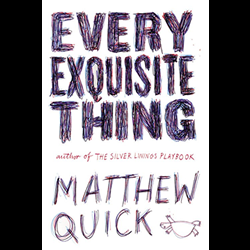
Book Review: Every Exquisite Thing

EVERY EXQUISITE THING by Matthew Quick tells the coming-of-age story of a young adult transformed by a cult classic.
When Nanette befriends the recluse author of a cult classic, she begins to see the world in new ways. She starts dating, quits the soccer team, and rebels against her stereotypical suburban life. However, rebellion can be costly. Quick’s engaging writing style immerses readers in Nanette’s voyage of self-discovery.
Librarians will find teens drawn into this well-written story that combines classic teen angst and rebellion with emerging confidence and courage. Fans of realistic fiction and topics such as mental health will be lining up for this one. English teachers will enjoy the references to poetry and literature.
To learn more about the author, go to http://matthewquickwriter.com/.
Published by Little, Brown, an imprint of Hachette. ARC courtesy of the publisher.

Saturday, May 14, 2016

Book Review: Jazz Day

JAZZ DAY: THE MAKING OF A FAMOUS PHOTOGRAPH by Roxane Orgill tells the true story of a graphic designer who wanted to share his passion for jazz music through a photograph.
This beautifully illustrated nonfiction picture book shares the story of how Art Kane invited jazz musicians to a photo session in Harlem. Told through engaging watercolor painting and lyrical verse, this page-turning story immerses readers in 1950s Harlem. From singers to musicians, many of the poems feature famous and everyday people who attended this special event. The Author’s Note, Biographies, and other end notes add to the authenticity of the work.
Librarians will find this unique book fits into a number of different situations. English teachers will be drawn to the verse, while history educators will enjoy the fascinating historical references. Librarians may wish to connect this book with primary source materials involving youth in comparing the photographs taken at the event with the picture book illustrations and story. Get children involved in learning more about the people in the photo. Also, think about ways to incorporate this book into an entire interdisciplinary music unit on jazz through history.
Look for this book on the “best of 2016” lists.
To learn more about the author, go to http://www.roxaneorgill.net/.
Published by Candlewick Press on March 8, 2016. ARC courtesy of the publisher.

Sunday, May 01, 2016

Book Review: When Green Becomes Tomatoes

WHEN GREEN BECOMES TOMATOES: POEMS FOR ALL SEASONS by Julie Fogliano uses forty-eight short poems to tell the story of a year.
The combination of Fogliano’s delicate, rhythmic voice with Morstad’s cheerful illustrations create a pleasing atmosphere for children to explore poetry. Most children will relate to the author’s exploration of everyday activities during each season.
Libraries will find this attractive picture book to be an enticing addition to the growing number of poetry books focusing on the seasons. Use it as a way to jumpstart student writing projects that explore the connection between nature and the human experience. The book features specific dates during the year. Ask students to write their own poems to fill in the gaps.
Published by Roaring Brook Press, an imprint of Macmillan on March 1, 2016. ARC courtesy of the publisher.

Thursday, April 28, 2016

Technology Review: Poetry

The POETRY app and website provides easy access to hundreds of well-known classic and contemporary poets and their poems.
Developed by The Poetry Foundation, the resource provides the poem along with information about the poet, links, and other materials. Users can search or browse poems and poets by categories including subjects, occasions, holidays, poetic terms, school/period, poet’s region, and poet’s birthdate. Features including articles, audios, and video.
A Learning Lab area of the website contains resources for teachers including poems, articles, lesson ideas, essays, and a glossary. A Children’s Poetry area features children’s poetry, articles, children’s video, and information about youth poetry projects. Of particular interest is the Young People’s Poet Laureate Jacqueline Woodson’s page.
The app provides easy access to poems and a way to save favorites.
Librarians will find this to be an easy-to-use website and app for youth. Teachers can easily connect the themes to classroom activities. The app’s mood feature will get students thinking about how poetry connects with emotions like optimism, boredom, disappointment, and joy.