Thursday, August 11, 2016

App Review: Apprentice Architect

APPRENTICE ARCHITECT is an app the involves youth in exploring a work of architecture and creating their own designs.
Inspired by the designs of Frank Gehry, app users explore the Foundation Louis Vuitton in Paris and create their own designs.
In the My Sketchbook section, users choose a shape based on familiar objects, then add color, patterns, and backgrounds.
In the Look Around You section, students explore how a building is designed and how it works.
In the Where’s Frank section, users learn about architect Frank Gehry.
In the Does the Work? section, 360 degree photographs are used to help users explore the museum building.
The Take the Controls section, allows users to operate a crane and explore the glass panels of the building.
The My Studio section, provides tools for youth to create their own designs.
Librarians will find this app to be an engaging way to introduce architects and architecture. Add this app to a learning station that includes online resources and books about other famous architects and their works. Incorporate the LEGO Architecture set as a hands-on experience with designing a building.
To download the app, go to http://archimoi.fondationlouisvuitton.fr/en/.

Wednesday, August 10, 2016

Book Review: The Leaving

THE LEAVING by Tara Altebrando is an engrossing mystery about a small group of children who suddenly disappear, then reappear after a decade.
Ten years after six children are taken from a school bus, five teens seem to appear out of nowhere. They don’t remember where they’ve been and can’t explain what happened to their missing peer. As the young people slowly re-enter society, the pieces of their missing lives begin to falling into place and the mystery unfolds.
Librarians will find this heat-pounding suspense to be popular among teens who enjoy both a suspense thriller and an engaging memory mystery.
To learn more about the author, go to http://www.taraaltebrando.com/.
Published by Bloomsbury on June 7, 2016. ARC courtesy of the publisher.

Tuesday, August 09, 2016

App Review: Ace Academy

ACE ACADEMY apps explores the history and science of fragile wood and fabric biplanes through a series of engaging, interactive experiences.
Developed by the Canada Aviation and Space Museum, the app begins with the basics of flight and proceeds to fascinating topics such as aerial photo-reconnaissance to airplane identification. Short animated videos narrated by a guide introduce each “flight training topic”. Users explore an aircraft, then complete a hands-on activity related to a key flight concept. Users proceed through nine sections learning about science and flight as they go. Users collect metals along the way to open up new levels. The program ends with a solo mission.
Librarians will find a large audience for this motivating learning experience. While some students will be attracted to the history, science, and flight information, others will simply enjoy the interactive flight aspects. Of particular note is the way that primary sources are woven into the experience. Weave this interactive app into an interdisciplinary project connecting history and science teachers.

App Review: Ace Academy

ACE ACADEMY apps explores the history and science of fragile wood and fabric biplanes through a series of engaging, interactive experiences.
Developed by the Canada Aviation and Space Museum, the app begins with the basics of flight and proceeds to fascinating topics such as aerial photo-reconnaissance to airplane identification. Short animated videos narrated by a guide introduce each “flight training topic”. Users explore an aircraft, then complete a hands-on activity related to a key flight concept. Users proceed through nine sections learning about science and flight as they go. Users collect metals along the way to open up new levels. The program ends with a solo mission.
Librarians will find a large audience for this motivating learning experience. While some students will be attracted to the history, science, and flight information, others will simply enjoy the interactive flight aspects. Of particular note is the way that primary sources are woven into the experience. Weave this interactive app into an interdisciplinary project connecting history and science teachers.

Monday, August 08, 2016

Book Review: Sabotage

SABOTAGE: THE MISSION TO DESTROY HITLER’S ATOMIC BOMBS by Neal Bascomb is a young adult edition of the best selling adult book “The Winter Fortress”.
This nonfiction narrative tells the true story of a band of young Norwegian commandos who survive in the winter wilderness and execute two dangerous missions to sabotage Nazi plans to build a nuclear bomb. Filled with technical details and vivid descriptions, Bascomb successful brings this historical event to life for readers.
Librarians will find that this fast-paced story of WWII era espionage will be popular among teens who enjoy historical fiction, military works, and narrative nonfiction. The author’s use of primary source documents including many photographs and maps add authenticity and drama to this true story. Add this title to the library’s growing number of quality works of narrative nonfiction for young adults.
Published by Scholastic on May 31, 2016. ARC courtesy of the publisher.

Sunday, August 07, 2016

Book Review: The Underdogs

THE UNDERDOGS by Sara Hammel is an exciting murder mystery with an unexpected twist.
When popular teen Annabel Harper is murdered at an elite tennis club, Evie and her best friend Chelsea set out to find the killer. From spying on the lead detective to conducting their own informal investigation, the two are intent on solving the crime.
Librarians will find youth re-reading this middle grade book looking for hidden clues to the book’s amazing twist. Ask readers to take a pledge of silence so they don’t give away the unexpected reveal near the end of the book. Although the mystery itself will be enough to keep most readers happy, it’s the unique twist that will keep this title circulating.
To learn more about the author, go to http://www.sarahammelbooks.com/.
Published by Farrar, Straus and Giroux an imprint of Macmillan on May 31, 2016. ARC courtesy of the publisher.

Saturday, August 06, 2016

Website Review: VisLit

VISLIT from the Toledo Museum of Art explores visual literacy, visual language, and the “art of seeing art”.
The “Why Visual Literacy” section examines reasons why it’s importance to understand visual language. The page features a video that introduces the concept.
The “Visual Language” section discusses visual communication and provides short videos focusing on creativity, critical thinking, educational achievement, empathy, and technology.
The “Art of Seeing Art” area makes that connection between visual literacy and art. This page takes students through six steps: look, observe, see, describe, analyze, and interpret. Although aimed at the topic of art, these steps can be applied to any visual situation.
Finally, many additional resources are provided including visual literacy curriculum materials for teachers.
Librarians will find this website to be an outstanding resource in teaching key concepts related to visual literacy. Although the project takes an art museum perspective, the resources can easily be adapted to the school library setting.
The “Do you speak visual?” project is a companion website that helps users understand the importance of graphic representations and how to “speak visual”.
To visit the Visual Literacy website, go to http://www.vislit.org/
To visit the Do You Speak Visual? website, go tohttp://doyouspeakvisual.com/.

Thursday, August 04, 2016

Book Review: On Bird Hill

ON BIRD HILL by Jane Yolen is an imaginative picture book taking readers on a walk through a fantasy landscape.
The endearing story follows a child and his dog as they stroll through a valley and zoom into the natural world. Loosely based on a century-old nursery rhyme, Jane Yolen has created an enchanting world for today’s children to explore. Bob Marstall’s illustrations bring the story’s surreal landscape to life with intriguing plants, animals, and human elements.
Librarians will find Yolen’s lyrical prose to be useful in storytelling activities. The whimsical, imaginary world sets the stage for a wide range of classroom activities. While some teachers may see opportunities for children to create their own imaginary worlds, others may see chances to talk about local plants and animals.
Learn more about the author at http://janeyolen.com/.
Learn more about the illustrator at http://bobmarstall.com/. Download a free teacher’s guide.
Published by Cornell Lab Publishing Group on May 10, 2016. ARC courtesy of the publisher.

Wednesday, August 03, 2016

Technology Review: Be a Martian

NASA’s BE A MARTIAN app and websites immerses students in experiences and information related to Mars missions.
The app is divided into sections exploring a wide range of tools, information, and activities.
The Featured section contains Mars posters, quick facts, and cards.
The See section focuses on visual representations of Mars including raw images from Curiosity, Mars as art, Mars photographs, short videos, and animations.
The Learn section explores Mars missions, Curiosity’s journey, news, videos, and information.
The Ask section allows youth to ask a question of NASA scientist Dr. Phil Christensen when he’s available.
The More section connects with NASA websites. The Be A Martian website extends the app experience and the Mars Exploration website contains news, information, and multimedia resources focusing on the Mars program.
Between the app and the websites, librarians will find endless resources exploring the Mars program for all grade levels. Consider developing a display that incorporates a tablet with the app, a laptop with the website, books, and focused, hands-on activities.
To download the app, go to https://itunes.apple.com/…/app/nasa-be-a-martian/id543704769.
To visit the app website, go to http://beamartian.jpl.nasa.gov/welcome.
To visit NASA’s Mars Exploration website, go to http://mars.jpl.nasa.gov/.

Tuesday, August 02, 2016

Book Review: Look Out for the Fitzgerald-Trouts

LOOK OUT FOR THE FITZGERALD-TROUTS by Esta Spalding features the goofy adventures of four children living on a tropical island.
This humorous middle grade novel features four siblings named Kim, Kimo, Peppa, and Toby living in a car on the beach. Although they’re making it work, they yearn for a home of their own.
Librarians will find middle grade readers attracted to the quick-witted children surrounded by terrible adults. Young people will be looking for the next book in this new series.
Learn more about the author at http://estaspalding.com/.
Published by Little, Brown, an imprint of Hachette on May 10, 2016. ARC courtesy of the publisher.

Monday, August 01, 2016

Book Review: Be a Friend

BE A FRIEND by Salina Yoon is a heartwarming picture book exploring individuality and friendship.
Dennis expresses himself through mime. While other children talk with friends and play with toys, Dennis uses his imagination for amusement. Over time, Dennis becomes lonely and is thrilled to meet another child who shares his passion for mime.
Yoon’s use of brown paper and the color red are inventive additions to her already appealing illustrations. Children will enjoy the illustrator’s nod to Marcel Marceau woven throughout the book.
Librarians will find this quiet picture book to be an effective tool in talking to children about individual differences, courage, and self-acceptance.
To learn about the author, go to http://www.salinayoon.com/
Published by Bloomsbury on January 5, 2016. ARC Courtesy of the publisher.

Sunday, July 31, 2016

Technology Review: The Story of Pelagie

THE STORY OF PELAGIE is an interactive app and website telling the story of an African American woman and her home in the 18th century.
Both the website and app tell the story of a former slave who became a free woman in Missouri. The interactive, digital story incorporates engaging video, primary source documents, and images from the historic Amoureux House. In addition to the story, a timeline is used to take readers through her life. Users can also go on an interactive home tour.
A teacher’s guide includes curriculum materials, lesson plans, resources, and activities to extend the experience. Links are provided to useful resources and documents to extend the experience.
Librarians will find this app and website to be useful in discussing history, culture, and architecture within the context of a specific person and place. Work with the social studies and history teacher to weave this rich, little-known history into the curriculum.

Saturday, July 30, 2016

Book Review: We Will Not Be Silent

WE WILL NOT BE SILENT: THE WHITE ROSE STUDENT RESISTANCE MOVEMENT THAT DEFIED ADOLF HITLER by Russell Freedman is the true story of siblings who stand up against the Nazis by distributing resistance leaflets.
This well-researched work of nonfiction tells the story of Hans Scholl and his sister Sophie who join the Hitler Youth, but soon realize they don’t agree with the movement. Along with their friends, they create the White Rose campaign against Hitler and the Nazis. Their underground movement includes distributing leaflets. Using photographs and easy-to-understand prose, these young people fought for their beliefs risking imprisonment and sometimes even execution. The book concludes with useful source notes, credits, and an index.
Designed for ages 10-14, librarians will find that youth will connect with this very accessible story of young people fighting for their beliefs. This little-known story is an excellent way to engage students in a discussion of Nazi Germany and the Holocaust.
Look for this title on the “best of nonfiction” lists for 2016.
Published by Clarion on May 2, 2016. ARC courtesy of the publisher.

Friday, July 29, 2016

Technology Review: Digital Stories

DIGITAL STORIES from the Wellcome Collection weaves digitized primary sources into fascinating historical stories.
This London library website currently contains two digital stories: Minecraft and The Collectors.
Using an intriguing web-based format, Minecraft explores a century of madness, murder and mental healing through historical photographs, drawings, paintings, and other primary source documents. In many cases, interactive features are available such as zooming into documents, extended galleries, and informational sidebars. Multimedia elements are also available.
The Collectors is a digital story focusing on the power of curiosity and the naturalists, explorers, scientists, and others who have been involved with collecting in centuries past. This interactive web-based project also features primary source materials and multimedia elements.
Librarians will find this website to be a fascinating way to present archival materials. Use the website when exploring primary sources and design an activity the involves students in writing their own digital stories based on a collection.
To visit the collection, go to http://digitalstories.wellcomecollection.org/.

Thursday, July 28, 2016

Book Review: The Wild Robot

THE WILD ROBOT by Peter Brown tells the thought-provoking story of a robot trying to survive and thrive in the wilderness.
When a ship carrying crates of robots sinks, one surviving robot is marooned on a remote island. Roz the robot soon finds a place in the unpredictable, outdoor world. Experiencing the seasons, making animal friends, and learning about nature, Roz gradually becomes part of the island’s animal community. When intruders come for Roz, the island creatures band together in support of their friend.
Young readers will be attracted to the many illustrations woven throughout the story. Peter Brown’s fascinating characters, fast-paced plot, and short, easy-to-read chapters will draw a large audience.
Librarians will find this book to be an engaging read-aloud option. The story’s unique premise combining the worlds of science fiction and the great outdoors makes for an unforgettable reading experience. Look for this title on many “best of 2016” lists.
To learn more about the author, go to http://www.peterbrownstudio.com/.
Published by Little, Brown for Young Readers, an imprint of Hachette. ARC courtesy of the publisher.

Wednesday, July 27, 2016

App Review: Earthquake

EARTHQUAKE by Nico Tranquilli is a free app providing the latest worldwide data about earthquake activity.
This attractive, well-designed app features a list of today’s seismic events along with an easy-to-use interactive map showing recent activity. The map makes it easy to zoom-in on areas of frequent activity. Students can select the magnitudes they wish to view including 2+, 3.5+, and 5+.
Each event includes it’s location, magnitude, depth, time, and coordinates. While much of the information comes directly from the USGS, other global services also contribute data.
Librarians will find this free app to be a useful addition to their app reference collection. Ask youth to compare recent earthquake activities to well-known faults and activities such as drilling. Incorporate this tool into meaningful, data literacy activities.
As an alternative to this app, go directly to the USGS Earthquake website athttp://earthquake.usgs.gov/ for current information.

Tuesday, July 26, 2016

Book Review: The First Step: How One Girl Put Segregation on Trial

THE FIRST STEP: HOW ONE GIRL PUT SEGREGATION ON TRIAL by Susan E. Goodman tells the inspiring story of the first lawsuit focusing on segregated schools.
Set in the 1840s, this biographical picture book follows the experiences of a young African American girl named Sarah Roberts who sought to attend a white school in Boston. The book concludes by tracing Sarah’s legacy. Although she didn’t win her case, the experience did provide a few small steps forward at the beginning of the fight for civil rights.
Goodman’s straight forward, easy-to-understand narration makes this book an effective resource for classroom social studies and history activities. E.B. Lewis’ touching watercolor images capture the time period and fervor of the times.
The back matter includes useful information including a timeline, biographies, resource list, and author’s note.
Librarians will find that most students and teachers are familiar with the Civil Rights Movement of the 1960s, however they may not realize that the fight against segregation began more than a century earlier in the courts. Use this picture book to jumpstart a discussion of the long history of the Civil Rights Movement.
To learn about the author, go to http://www.susangoodmanbooks.com/.
To learn about the illustrator, go to http://eblewis.com/.
Published by Bloomsbury on January 5, 2016. ARC Courtesy of the publisher.

Monday, July 25, 2016

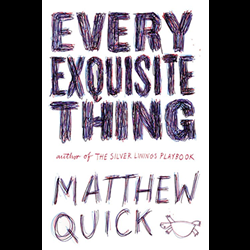
Book Review: Every Exquisite Thing

EVERY EXQUISITE THING by Matthew Quick tells the coming-of-age story of a young adult transformed by a cult classic.
When Nanette befriends the recluse author of a cult classic, she begins to see the world in new ways. She starts dating, quits the soccer team, and rebels against her stereotypical suburban life. However, rebellion can be costly. Quick’s engaging writing style immerses readers in Nanette’s voyage of self-discovery.
Librarians will find teens drawn into this well-written story that combines classic teen angst and rebellion with emerging confidence and courage. Fans of realistic fiction and topics such as mental health will be lining up for this one. English teachers will enjoy the references to poetry and literature.
To learn more about the author, go to http://matthewquickwriter.com/.
Published by Little, Brown, an imprint of Hachette. ARC courtesy of the publisher.

Sunday, July 24, 2016

Website Review: College Navigator

COLLEGE NAVIGATOR helps teens explore schools and prepare for life after high school.
Created by the Institute of Education Sciences, this U.S. government website takes young adults step-by-step through the process of finding a college. Search options include finding schools by name, state, distance from home, program, academic level, institution type, and more. An interactive map helps users see school locations. Students can create lists of favorite schools, do side-by-side comparisons, download results on a spreadsheet, and even save searches.
Each college entry contains general information (i.e., map, website link, offerings, demographics) along with costs, financial aid, enrollment, admissions, retention and graduation rates, programs, and other useful information.
In addition to the database of schools, the website contains links to many other online government resources. The College Affordability and Transparency Center helps teens compare the price of tuition and fees. Other resources include information about preparing for post-high school education, financial aid, and career exploration.
Librarians will find this easy-to-use website helpful in assisting students with locating college information. While many commercial websites are filled with sponsored ads and possible bias, this government website contains nicely presented factual information presented in alphabetical order. It’s easy for students to get overload with the information found at college websites. This tool makes it simple for students to locate and compare information.
To visit the website, go to http://nces.ed.gov/collegenavigator/.

Saturday, July 23, 2016

Book Review: The Drake Equation

THE DRAKE EQUATION by Bart King is a humorous science fiction adventure.
While on a quest for an elusive bird, Noah instead finds a mysterious, glittery disk. This middle-school youth suddenly acquires strange powers that lead to funny adventures.
Librarians will find that young readers empathize with the young birdwatcher and his friends. While the science fiction aspects don’t really take off until the second half of the book, most children will enjoy the school and friendship aspects of the story.
To learn more about the author, go to http://www.bartking.net/.
Published by Disney-Hyperion on May 10, 2016. ARC courtesy of the publisher.

Friday, July 22, 2016

Website Review: NASA WAVELENGTH

NASA WAVELENGTH provides a full spectrum of resources for science education.
Sponsored by NASA, this website provides access to a digital collection of Earth and space science resources for all grade levels. Specifically, they focus on helping students develop an understanding of our planet Earth, our Sun and solar system, and the universe.
The Science Data and Images section is divided into introductory, intermediate, and advanced resources. The page shares key online collections and descriptions of these resources.
The Strandmaps page links to interactive concept maps on specific science and math topics in the areas of the physical setting, the nature of science, the living environment, the designed world, habits of mind, the nature of technology, and common themes. Each map introduces related concepts, how the concepts are aligned to benchmarks and standards, and links to resources.
The blog provides news, updated information, and resources of interest to educators in a wide range of topics such as astronomy, astrophysics, citizen science, data, and others.
A search tool can be used to find resources by key word and audience. Materials can also be explored by grade level. Finally, links are provided to key multimedia resources including apps, videos, and images.
Librarians will find these resources to be popular with science teachers. Work with teachers to align the materials with the curriculum.
To visit the website, go to http://nasawavelength.org/.

Thursday, July 21, 2016

Book Review: A Beginner's Guide to Bear Spotting

A BEGINNER’S GUIDE TO BEAR SPOTTING by Michelle Robinson is an adorable picture book adventure.
Robinson’s quirky approach to storytelling is sure to entice young readers. An adorable child narrator carrying a field guide provides readers with useful and sometimes silly information about identifying and interacting with bears in the forest.
David Robert’s use of graph paper, appealing typography, and endearing characters make the book particularly appealing.
Librarians will find a large audience for this outdoor adventure. Pair the book with animal books and field guides for a fun display. The field-note theme has lots of possibilities for science projects and nature connections. Encourage children to write their own story about a favorite animal encounter incorporating both fact and fiction.
To learn more about the author, go to http://michellerobinson.co.uk/.
Published by Bloomsbury on February 9, 2016. ARC courtesy of the publisher.

Wednesday, July 20, 2016

Website Review: DK FindOut!

DK FINDOUT! is an educational site for children that explores topics across subject areas.
The website presents easy-to-understand and attractively presented information about a wide range of topics including animals and nature, computer coding, dinosaurs and prehistoric life, Earth, history, human body, language arts, math, music, art, and literature, science, space, sports, transportation, and more.
Each page includes an overview of the topic along with videos and quizzes. A subject such as animals is divided into sub-topics such as The Animal Kingdom, Food chains, Cats, Dogs, and Amphibians. Once inside a sub-topic, users can explore key ideas through short articles, videos, interactives, and more. The website is loaded with practical information and relevant examples.
Parent and teacher sections provide a wealth of resources including quizzes, videos, and article to help children learn.
An easy-to-use search tool assists youth in locating information on topics of interest.
Librarians will find this to be a popular tool with both teachers and students. Consider aligning the key content with informational reading activities throughout the curriculum. Fans of DK books will immediately recognize the format and appealing visuals that have become the hallmark of DK publications.
To visit the website, go to http://www.dkfindout.com/us/.

Tuesday, July 19, 2016

Book Review: Almanac 2017

ALMANAC 2017 by National Geographic Kids is a reference book chuck-full of fascinating facts and activities.
The almanac begins with a table of contents including Your World, Amazing Animals, Going Green, Culture Connection, Awesome Adventure, Fun and Games, Super Science, Wonders of Nature, History Happens, and Geography Rocks. Each section includes photographs, diagrams, games, jokes, and lots of activities.
Color-coded tabs make it easy to thumb through the book looking for sections of interest. An index also helps with access.
Almanacs are always a hit with youth. Librarians will find the 2017 edition contains about 40% new content. Readers will find expanded content at the national Geographic Kids website.
For online content, go to natgeokids.com/almanac.
Published by National Geographic Kids on May 10, 2016. ARC courtesy of the publisher.

Monday, July 18, 2016

Technology Review: Foodkeeper

The FOODKEEPER website and app helps consumers understand food and beverage storage to maximize freshness and reduce waste.
This easy-to-use website and app allows users to browse or search for a food item such as marshmallows or chicken nuggets. Then, the tool provides information about freshness, storage, and cooking tips.
Developed by the USDA’s Food Safety and Inspection Service, the app is designed for the general public but would be very useful in home and consumer science classes.
Librarians will want to add this easy-to-use app to their reference app collection for easy access. The app would also be useful in math or data literacy classes as a data set source.
To use the website or download the app for Android for Apple, go tohttps://www.foodsafety.gov/keep/foodkeeperapp/.

Sunday, July 17, 2016

Website Review: Disability History Museum

THE DISABILITY HISTORY MUSEUM website hosts a digital collection, educational materials, and museum exhibits exploring the historical experience of people with disabilities and their communities.
The Library Collections section contains a broad range of digital objects including letters, memoirs, chapbooks, postcards, photos, cartoons, and more that shaped the experiences of people with disabilities. Users can browse by category or search the collection.
The Education section provides ideas for teaching with primary sources. The materials explore ways to weave disability history topics into history, civics, and literature classes. After exploring an overview, users can examine lesson plans and other teaching tools of interest.
The Exhibits section is currently under development.
With over 3,000 primary source documents and images to explore, librarians will find this website to be an excellent tool for weaving the historical experiences of people with disabilities into the curriculum through the use of primary sources.
To visit the website, go to http://www.disabilitymuseum.org/.

Book Review: 125 Wacky Roadside Attractions

125 WACKY ROADSIDE ATTRACTIONS by National Geographic Kids shares strange and bizarre landmarks from around the world.
Part of the 125 AMAZING STORIES collection, this book features dozens of peculiar places. After a short introduction, children can explore a world map showing the location of each destination. Next, the book jumps into displaying a photograph and information about each place including what it is, where it is, and special features. While some sections of the book explore categories such as loony lodging or kooky collections, most of the landmarks seem to be presented at random. While this approach lends itself to browsing, it may be disorienting for children interested in a particular type of location such as museums, gardens, or works of art. An index helps those seeking attractions in specific locations such as Oklahoma.
From weird sculptures to amazing collections, this colorful, informational book for middle grades will be a hit with youth who enjoy browsing. Weave the book into a display featuring travel books and fictional road trip titles.
Published by National Geographic Kids on May 10, 2016. ARC courtesy of the publisher.

Friday, July 15, 2016

Book Review: If You Ever Want to Bring a Piano to the Beach, Don't

IF YOU EVER WANT TO BRING A PIANO TO THE BEACH, DON’T! by Elise Parsley is the second book in the humorous “MAGNOLIA SAYS DON’T” series.
This cautionary tale follows Magnolia who is determined to bring her piano to the beach. From fighting off nesting seagulls to washing the piano in the ocean, Magnolia deals with disaster after disaster before deciding that bringing a piano to the beach is a bad idea.
The combination of adorable, brightly colored illustrations with an unexpected ending make this picture book useful for read-aloud experiences. Librarians will find that the book lends itself to endless classroom connections for discussion and writing activities.
To learn more about the author-illustrator, go to http://www.eliseparsley.com/.
Published by Little, Brown for Young Readers on May 3, 2016, an imprint of Hachette Book Group. ARC courtesy of the publisher.

Thursday, July 14, 2016

Book Review: Summer of Sloane

SUMMER OF SLOANE by Erin L. Schneider explores issues of betrayal, forgiveness, and romance during a summer in Hawaii.
When she learns that her best friend is pregnant with her boyfriend’s baby, Sloane uses a summer trip to Hawaii to distract her from their betrayal. However texts and voicemails are constant reminders of the mess she left behind making it difficult for her to enjoy a new romance.
Librarians will find a market for this book among readers who enjoy teen angst, romance, and complex friendships. Well-rounded characters and engaging plot twists make this a page-turner for teens who enjoy realistic fiction. Better than the standard romance fare, this work of contemporary fiction addresses issues of deception and forgiveness head-on.
To learn more about this author, go to http://www.erinlschneider.com/.
Published by Disney-Hyperion on May 3, 2016. ARC courtesy of the publisher.

Wednesday, July 13, 2016

Website Review: Science Updates

SCIENCE UPDATES from ScienceNetLinks are student-friendly 60-second audio programs focusing on current science research.
Sponsored by the American Association for the Advancement of Science, each science topic contains a 60-second audio clip, transcript, and image. The page also explores ways to make sense of the scientific research. Each topic concludes with a list of questions, links to the original research, and related topics of interest. The resource also provides the grade level focus, theme, benchmarks and standards associated with the topic. An For Educators section contains links to lesson plans and activity ideas.
Librarians will find that these concise pages are an excellent way to address information literacy standards related to audio literacy and informational reading comprehension. With dozens of topics to explore, each student could investigate their own topic making this resource an excellent jumping off spot for inquiry-based learning projects.

Tuesday, July 12, 2016

Book Review: Ocean Animals

OCEAN ANIMALS: WHO’S WHO IN THE DEEP BLUE by Johnna Rizzo explores all aspects of marine life while also featuring key conservation ideas.
This colorful work of nonfiction begins with an overview of oceans, layers of life, and coral reefs. Next, the book features different categories of marine life. The text concludes with information about habitats and conservation topics. A glossary and index are also provided.
Rather than overwhelming readers with information, this book provides large photographs and small blocks of text making it useful for youth who are resistance to text-heavy books.
Featuring amazing color photographs and easy-to-read blocks of text, librarians will find this fact-filled informational book to be popular with children who enjoy reading about marine life. The book is organized well for students working on research projects related to specific aspects of ocean life.
Published by National Geographic Kids on May 17, 2016. ARC courtesy of the publisher.

Monday, July 11, 2016

Book Review: Holding Smoke

HOLDING SMOKE by Elle Cosimano is a heart-pounding, young adult fantasy thriller.
After a near death experience, Smoke finds that he’s able to leave his body as a ghost and move among people without their knowledge. Behind bars for a murder he didn’t commit, Smoke uses this special ability to gather information that can keep him alive in the youth detention facility while also seeking clues that could set him free.
Librarians will find that complex character development, compelling plot twists, and interesting use of Smoke’s abilities will drawn in lovers of suspense as well as those who simply enjoy a good story. While the detention facility is portrayed more as a maximum security prison than a youth rehabilitation center, young adult readers will enjoy this fast-paced suspense. This selection will be very popular among teen boys, but will also appeal to young women who enjoy the hint of romance.
To learn more about the author, go to http://ellecosimano.com/.
Published by Disney-Hyperion on May 3, 2016. ARC courtesy of the publisher.

Sunday, July 10, 2016

Technology Review: Election Central

ELECTION CENTRAL from PBS LearningMedia is an educational guide to the United States elections.
The website is divided into six sections.
The Election Collection section contains links to exemplary election-themed resources to enhance lesson plans and spark discussion.
Inside the Debates explores the role of debates as a forum for candidates to share their view. Resources including behind-the-scenes materials, debate guidelines, debate video, and connections with debates in history.
The Interactive Map shows the delegate count and provides information about the election process in each state.
The Election Process section provides resources to help young people learn about the electoral college, caucuses, primaries, conventions, and more.
The Virtual Field Trips provides links to government-related field trips that focus on the political process.
50 for 50 is a contest connected with the 2016 election.
Librarians will find this website to be useful across grade levels. Consider creating an election center in the library that includes a display, books related to elections, and a tablet containing this website.
To visit the website, go to http://www.pbseduelectioncentral.com/.

Saturday, July 09, 2016

Book Review: Ellis Island

ELLIS ISLAND by Elizabeth Carney traces the history of Ellis Island.
Written for fluent readers, the book contains short chapters exploring the history of Ellis Island. Throughout the story, readers will find boxes containing facts, quotes, and key words. Photo captions and labels provide additional information for readers. The book also contains a quiz, glossary, and index.
Librarians will find this short book to be a valuable addition to their nonfiction collection. The many black and white, as well as color photographs will draw the interest of primary grade students. With lots of visuals and easy-to-read text, this National Geographic Readers title would be particularly useful for reluctant readers working on history reports. Use this title along with other nonfiction works in this collection as part of an informational reading, literature circle activity.
Published by National Geographic on April 12, 2016. ARC courtesy of the publisher.