Showing posts with label medicine. Show all posts

Monday, October 03, 2022

Timely Take-aways: Medicine and Medical History


Timely Take-aways for Life-long Learners: Medicine and Medical History

From natural remedies and inoculations to surgical practices, several new works of nonfiction explore the history of medicine and its impact around the world.

Empire of the Scalpel: The History of Surgery
Ira Rutkow, Mar 2022, Scribner, an imprint of Simon & Schuster
Themes: Medical, History

Tracing the fascinating story of surgery through global history, EMPIRE OF THE SCALPEL shares the key people and breakthroughs that established the foundations for today’s life-saving medical practices.

Take-aways: Educators will find useful examples of how the science of surgery evolved over time. Use these people and practices to demonstrate the importance of ongoing research and perseverance. 


The Empress and the English Doctor
Lucy Ward, Jun 2022, Oneworld Publications, an imprint of Simon & Schuster
Themes: History, 18th century, Medical

THE EMPRESS AND THE ENGLISH DOCTOR is a fast-paced, nonfiction narrative telling the story of Catherine the Great’s quest to inoculate the masses against smallpox. Rather than focusing on the science itself, the true story explores the challenges of preventative health care in the 18th century.

Take-aways: Use this story as an example of the importance of political leadership in promoting science. 


The Physick Garden: Ancient Cures for Modern Maladies
Alice Smith, April 2022, Frances Lincoln, an imprint of Quarto Group
Themes: Medical, Natural Remedies, Herbs, History

THE PHYSICK GARDEN shares information about 80 plants used in natural remedies and alternative medicine. Each two-page spread explores a plant, its medicinal uses, along with both ancient tales and modern research about its use in healing.

Take-aways: This book provides a fascinating interdisciplinary approach to medicinal plants. Use it to identify engaging examples that connect science and history topics.


Healing a Divided Nation: 
How the American Civil War Revolutionized Western Medicine
Carole Adrienne, August 2022, Pegasus Books, an imprint of Simon & Schuster
Themes: History, United States, Civil War period, Medical

HEALING A DIVIDED NATION examines the revolutionary advances made in medical science during the Civil War. These innovations transformed healthcare along with a wide range of related areas from education and culture to technology.

Take-aways: The long term impact of the medical advances during the Civil War era are found across disciplines. Demonstrate the key connections between science and history.


Heroes and Scoundrels
Moira Dolan, August 2022, Quill Driver Books, an imprint of Ingram Publisher Services
Themes: Biography, History, Science, Medicine

Part of the Boneheads and Brainiacs series, HEROES AND SCOUNDRELS explores both honest and dishonest medical researchers (1951-1975) connected with the Nobel Prize.

Take-aways: Reflect on both the positive and negative decisions made for medical progress.


Whether helping educators keep up-to-date in their subject-areas, promoting student reading in the content-areas, or simply encouraging nonfiction leisure reading, teacher librarians need to be aware of the best new titles across the curriculum and how to activate life-long learning. - Annette Lamb

Tuesday, February 01, 2022

Timely Take-Aways for Life-Long Learning: Fungi, Herbs, and Human Connections


Fungi, Herbs, and Human Connections

The fascinating world of fungi and herbs is the topic of several new works of nonfiction. From updates in mycology to the traditions of ginseng gathering, these titles explore an often overlooked area of science and agriculture.


The Secret Life of Fungi: Discoveries From a Hidden World
Aliya Whiteley, Sep 2021, Pegasus Books, an imprint of Simon & Schuster
Themes: Science, Life sciences, Nature, Mycology

THE SECRET LIFE OF FUNGI shares the joys of nature, mushrooms, and mycology. Whether detailing medicinal uses of mushrooms or describing microfungus that eat plastic, each short essay begins with a drawing followed by an engaging story filled with humor and relatable anecdotes.

Take-aways: Both teen readers and educators will connect with the author’s passion for her subject. Making the science fun and the facts friendly, science teachers will find many timely examples of fungi in agriculture, medicine, and other allied fields. 


The Hidden Kingdom of Fungi: Exploring the Microscopic World in Our Forests, Homes, and Bodies
Keith Seifert, Apr 2022, Greystone Books
Themes: Science, Life sciences, Nature, Mycology

THE HIDDEN KINGDOM OF FUNGI introduces the fascinating world of mycology. Divided into three sections: the hidden kingdom, the fungal planet, and the mycelial revolution, each chapter explores meaningful examples of our relationship with fungi from the famous potato famine in Ireland to new research in DNA.

Take-aways: As a career scientist, the author is effective in making the science of fungi accessible to non-experts. Educators will find his focus on human connections and building a sustainable future useful. Young adults interested in the mycology will be engaged by the science, the hands-on stories, and the timely examples.


Ginseng Diggers: A History of Root and Herb Gathering in Appalachia
Luke Manget, Feb 2022, The University Press of Kentucky
Themes: Social Science, Agriculture, Food

GINSENG DIGGERS traces the history of Appalachia’s ginseng trade and how the root along with related medicinal plants became a global commodity. Using country store archival records and other primary sources, Manget describes the gathering culture and use of public lands through history with emphasis on the American Civil War era.

Take-aways: Rather that focusing on the science of ginseng plant, the author explores the economic, environmental, and medical impact of this valuable herb. Both science and history teachers will find useful examples that connect this extraordinary plant with the local gathering culture and the global botanical drug trade over time.


Whether helping educators keep up-to-date in their subject-areas, promoting student reading in the content-areas, or simply encouraging nonfiction leisure reading, teacher librarians need to be aware of the best new titles across the curriculum and how to activate life-long learning. - Annette Lamb

Saturday, January 15, 2022

Timely Take-Aways for Life-Long Learning: Medieval Life

New Takes on Medieval Life

New works of nonfiction bust myths about the people and progress of the Middle Ages by providing new perspectives on this often misunderstood time period.

The Middle Ages: A Graphic History
Eleanor Janega, Sep 2021, Icon Books
Themes: graphic history, European history, Middle Ages, Medieval

THE MIDDLE AGES is a highly illustrated history of Medieval times. Combining engaging visuals with a conversational approach, this graphic history provides a useful overview with many specific examples and lots of fun along the way.

Take-aways: Rather than a dark period in history, Janega stresses that Medieval times featured art, culture, and intellectual development. Contains lots of ideas for reluctant learners and useful examples. 


Powers and Thrones: A New History of the Middle Ages
Dan Jones, Nov 2021, Viking/8 Titles
Themes: Europe history, Middle Ages, Medieval

POWERS AND THRONES explores a thousand years of medieval history. Divided into four parts: imperium, dominion, rebirth, and revolution, each section explores key individuals, transformational events, and enduring themes

Take-aways: Of particular note is Jones’ global approach to this time period while maintaining a mostly western lens. Young adults will enjoy the author’s conversational approach and themes of interest to contemporary readers.


The Bright Ages: A New History of Medieval Europe
Matthew Gabriele & David M. Perry, Nov 2021, Harper Collins
Themes: European history, Middle Ages, Medieval

THE BRIGHT AGES casts a new light on well-known people and events of the European Middle Ages. The book begins with the story of a Roman woman artisan and concludes with a debate about the prospects of the New World.

Take-aways: Gabriele and Perry help readers understand why long-held beliefs about the backward nature of the dark ages need to be replaced by an understanding of the time period that includes a broader, more diverse, and more inclusive view.


Medicine in the Middle Ages: Surviving the Times
Juliana Cummings, Dec 2021, Pen and Sword History
Themes: Medical history, Middle Ages, Medieval

MEDICINE IN THE MIDDLE AGES describes the perils of medieval life and how these people approached healing. Rooted in the work of ancient Greek and Roman philosophers, medieval medicine was linked to both the Catholic Church and the social status of patients. Explore the birth of hospitals and the horrors of war.

Take-aways: Educators will find this book useful in helping their students understand the challenges faced by both the rich and poor of the middle ages. From science and social studies to history, this book takes a multi-disciplinary approach to exploring the connection among religion, torture, plagues, medicine, and disease.

Whether helping educators keep up-to-date in their subject-areas, promoting student reading in the content-areas, or simply encouraging nonfiction leisure reading, teacher librarians need to be aware of the best new titles across the curriculum and how to activate life-long learning. - Annette Lamb

Monday, July 12, 2021

Synergy: Vaccination

Vaccination is the process of administering a vaccine. Vaccines are used to prevent illness from an infectious disease such as smallpox or polio. Vaccines work by helping the patient’s immune system develop protection from the disease.

Read the work of graphic science for youth, then learn more at the websites:

A SHOT IN THE ARM! by Don Brown is the third book in the “Big Ideas that Changed the World” series of juvenile nonfiction graphic science books. From smallpox to COVID-19, this engaging graphic science book examines the history of deadly disease and the essential role of vaccinations in saving lives. Told through high-quality, engaging illustrations and concise text, this timely work shares the science behind vaccinations and the key scientists who have made them possible. Although the book primarily on the history of smallpox, other diseases are also woven into the story.

THE HISTORY OF VACCINES provides a timeline, articles, and activities exploring the development and use of vaccines through time.

To visit the website, go to https://www.historyofvaccines.org/.

THE UNTOLD STORY OF THE FIRST VACCINE from SciShow shares the long history of smallpox and how medical breakthroughs across thousands of years lead to the vaccine.

To watch the video, go to https://youtu.be/jtqAqL3fn64.

VACCINES 101 from Nature is a short video describing how vaccines work in the human body.

To watch the video, go to https://youtu.be/4SKmAlQtAj8.

ARC courtesy of Amulet Books an imprint of Abrams.

Monday, May 03, 2021

Synergy: Veterinarian

A veterinarian is a professional who treats the diseases, injuries, and disorders of non-human animals. Many veterinary physicians work with a specific group of animals such as livestock, pets, zoo animals, or wild animals. There are many specializations within veterinary medicine such as animal welfare, surgery, and dentistry.

Read the nonfiction book for youth, then learn more at the websites:

WILD VET ADVENTURES: SAVING ANIMALS AROUND THE WORLD with Dr. Gabby Wild follows a wildlife veterinarian as she cares for animals around the world. As readers explore each continent, they learn about the wildlife and the people who co-exist in each ecosystem. In each section, readers learn about veterinary patients including animal anatomy, habitats, and the dangers they face from predators and people. The book concludes with information about conservation and a glossary. The use of icons, fact boxes, bright colors, and photographs are likely to engage even the most reluctant reader.

WILDLIFE REHABILITATION from the Wildlife Medical Clinic at the University of Illinois teaches teens about veterinary care, education, and conservation. To learn more, go to https://bit.ly/31LHnGx.

Author DR. GABBY WILD has a website and YouTube Channel. The web-based resources share her role as both a veterinarian and eco-fashionista. To learn more, go to https://gabbywild.org/. Visit her YouTube Channel at https://bit.ly/3a2lFmf.

ARC courtesy of National Geographic Kids.

Wednesday, November 07, 2018

Digital Spotlight: Florence Nightingale Digitization Project

The FLORENCE NIGHTINGALE DIGITIZATION PROJECT is part of an International Digital Collaborative.
Contents: The collection contains more than 2300 handwritten or narrated letters by Florence Nightingale. Suggested search terms such as hospitals, military medicine, nursing, rural health services, and workhouses are provided. Users can search all the collections or a specific collection such as the American Nurses Association or the British Red Cross.
Classroom Connections: Use this digital collection as an excellent example of a biographical collection. Or, use it to focus attention on the value of original letters in historical research.
Featured Digital Objects:
Hospital Design https://bit.ly/2Nfgz7D
Sanitary Engineering https://bit.ly/2QoP4KU
Statistics https://bit.ly/2DQnjJZ
To visit the collection, go to http://hgar-srv3.bu.edu/web/florence-nightingale

Friday, March 09, 2018

Digital Spotlight: Qatar Digital Library

QATAR DIGITAL LIBRARY is a free digital collection exploring the modern history and culture of the Gulf region.
Contents: Users can choose to explore the archives or read articles from experts. Exploring the archive provides access to over a million items. The expert articles can be filtered by topic, location, and time period. The See, Watch, Listen option provides a quick look at interesting topics. A list of popular topics is provided along with a search tool with filters.
Classroom Connections: Use this website as a starting point for an exploration of the Gulf region. Ask students to choose a topic, place, or time period of interest from the expert section to jumpstart their exploration.
Featured Digital Objects:
Introductory Articles https://goo.gl/BzsvhD
History of the English East India Company https://goo.gl/Ue7RnZ
Science and Medicine https://goo.gl/KwpWio
To visit the collection, go to https://www.qdl.qa/en.

Monday, September 25, 2017

Website Review: Native Voices

NATIVE VOICES is an online exhibition from the National Library of Medicine exploring health and illness from the perspective of Native peoples.
This online exhibition is divided into four sections: exhibition, interviews, timelines, and resources. The exhibition explores ways that wellness, illness, and cultural life of Native peoples are interconnected exploring the perspectives of Native Americans, Alaska Natives, and Native Hawaiians as well as providing an art gallery. The project contains interviews with health professionals, community leaders, traditional healers, and others working on health-related issues. Users can access these by theme, name, or region. The timelines highlights key events from antiquity to today. Finally, the resources section contains career planning and educational materials.
Librarians will find lesson plans, online activities, and other resources that can easily be woven across the K-12 curriculum.
To visit the website, go to https://www.nlm.nih.gov/nativevoices/.

Friday, July 28, 2017

Website Review: Confronting Violence

CONFRONTING VIOLENCE: IMPROVING WOMEN’S LIVES is an online exhibition exploring the history of women’s health issues.
Produced by the U.S. National Library of Medicine, this fascinating online exhibition explores issues in domestic violence and women’s health through history. The exhibition contains six sections: introduction, generations of reformers, nurses take a stand, medicine confronts violence, change is possible, and the work continues. Each section features a short narrative along with primary source documents. The digital gallery provides easy access to a wide range of documents, images, and other materials. The education section connects with lesson plans, higher education resources, online activities, and other resources.
Librarians will find this resource useful in history, social studies, and science classrooms. Students will find the exhibition easy to use and provides inspiration for extended activities. Teachers will find the lessons to be useful for both in-class and out-of-class assignments.

Friday, July 07, 2017

Website Review: Frankenstein: Penetrating the Secrets of Nature

FRANKENSTEIN: PENETRATING THE SECRETS OF NATURE explores the history of individual and societal responsibility for other people.
Produced by the National Library of Medicine, the online project is divided into three sections: exhibition, education, and digital gallery. Each of the six areas of the exhibition includes a short narrative and fascinating primary source materials. The educational section features lesson plans, online activities, and other resources. Finally, the digital gallery provides access to a wealth of interested historical texts and images.
Librarians will find that students are attracted to the ethical and societal issues addressed in this online exhibition.

Friday, June 16, 2017

Digital Spotlight: Medicine and Madison Avene

MEDICINE AND MADISON AVENUE is a digital repository exploring the rise of the consumer culture during the first half of the 20th century.
Contents: Housed at Duke University Libraries, this collection contains 600 health-related advertisements connecting modern medicine with the consumer culture. From cough and cold remedies to laxatives and vitamins, users can search by date, company, product, subject, publication, medium, or format.
Classroom Connections: Advertisements are an effective way to engage students with health and history topics. This digital collection can also be used to teach about marketing techniques and changes in society and culture during the 20th century.
To visit the collection, go to https://repository.duke.edu/dc/mma.

Friday, May 12, 2017

Digital Spotlight: The Influenza Encyclopedia

The INFLUENZA ENCYCLOPEDIA is a collection of over 16,000 historical documents and photographs chronicling the epidemic of 1918.
Contents: Produced by the University of Michigan, this well organized project provides easy access to popular categories including people, places, organizations, and subjects. Users can also explore by 50 U.S. cities and towns or examine the image gallery. A key word search tool is also provided.
Classroom Connections: Teachers will find this resource to be an engaging way to explore the tragic events surrounding the 1918 influenza epidemic. Connect it with works of historical fiction and nonfiction books in the collection.
To visit the collection, http://www.influenzaarchive.org/.

Tuesday, February 07, 2017

Book Review: Bleed, Blister, Puke, and Purge

BLEED, BLISTER, PUKE, AND PURGE by J. Marin Younker tells the stories behind early American medicine.
From the 1600s to the 1800s, Younker examines the history of medicine in early American history. Of particular note is the section on the Civil War. This well-researched work of nonfiction effectively weaves in primary source documents including newspaper articles and other materials.
Librarians will find this book popular with students doing reports related to early medicine. Many young people enjoy the macabre. Work with teachers to promote both your fiction and nonfiction works related to medicine to engage history students.
Published by Houghton Mifflin Harcourt Children’s Book Group on October 25, 2016. ARC courtesy of the publisher.

Monday, January 02, 2017

Digital Collection: National Library of Medicine

U.S. NATIONAL LIBRARY OF MEDICINE
Contents: The National Library of Medicine’s online resources include biomedical books, still images, videos, and more. The resources can be accessed by collection, subject, author, title, format, language, genre, or date.
Classroom Connections: From posters to videos, digital objects can bring science topics to life. Connecting medicine and history is an effective way to draw student interest to both science and history. Ask students to create a timeline of primary source documents tracing a topic such as cholera through history. Or, search for posters on a particular topic such as AIDS, malaria, or yellow fever and trace how the medical communications change over time.
Featured Digital Objects:
Cholera - https://goo.gl/yICgJn
Tropical Disease - https://goo.gl/OVW1G9
Public Health & War - https://goo.gl/A3xif8
Moving Pictures - https://goo.gl/FtFHgM
To visit the collection, https://collections.nlm.nih.gov/.

Saturday, October 01, 2016

Website Review: Cancer

CANCER: THE EMPEROR OF ALL MALADIES is a three-part PBS series and website with lots of online content.
The About the Film section explores the information about the film and it’s producers.
The Our Story Wall section shares stories from people’s whose lives have been impacted by cancer.
The Media Gallery section provides access to digital shorts, full episodes, and film clips.
The History of Cancer Timeline section visualizes key events before 1940, 1940-1970, 1970-today, and tomorrow.
The Producers’ Blog shares information about updates related to the program and the second screen option provides supplemental information to go with the film.
The Classroom section features video, trivia, infographics, discussions, and other resources to supplement the films.
Librarians will find that this amazing three-part series provides high-quality information useful for health, science, and social studies classrooms.
To visit the website, go to http://cancerfilms.org/.

Friday, January 22, 2016

Book Review: Breakthrough!

BREAKTHROUGH! by Jim Murphy tells the fascinating true story of the three researchers responsible for developing a procedure to treat “blue baby syndrome”.
Aimed at the middle grades and young adults, the engaging nonfiction narrative explores how three people came together to create a groundbreaking medical procedure to repair a severe type of heart defeat. What makes the book particularly compelling is that each contributor faced professional challenges. As an African-American, Thomas faced prejudice and as a woman, Blalock dealt with gender-bias.
Murphy is known for his effective use of primary source documents. While the book contains photos of the people involved and some images of medical procedures, it lacks the wealth of photographs, diagrams, and other illustrations that bring Murphy’s other works to life.
The book contains source notes, a bibliography, and an index that are useful in research. However, the narrative style will make it difficult for students to use for research projects unless they read the entire work.
Librarians will find that this book will appeal to students who enjoy narrative nonfiction related to science and medicine. However unlike some of his other books, it’s not likely to appeal to reluctant readers.
This title would be an excellent addition to the library’s growing collection of books that connect STEM with issues of diversity.
To learn more about the book, go to http://jimmurphybooks.com/.
Published by Clarion on December 8, 2015. ARC from the publisher.

Sunday, November 08, 2015

Website Review: The Cancer Atlas

THE CANCER ATLAS is a website providing fascinating information about the global cancer landscape.
Sponsored by the American Cancer Society, World Health Organization, and the Union for International Cancer Control, the attractive and content-rich website contains sections focusing on different aspects of the problem.
The Data section provides access to an interactive map. Users view data based on metrics such as smoking prevalence, air pollution, or most commonly diagnosed cancer. This data can be presented on a world map or by specific country. Users can also display information on a list. A button is available to learn more about a particular metric. A comparison option is provided so users can compare data by country.
The Risk Factors section provides an overview to known risk factors along with specific factors such as tobacco, infections, diet and body composition, and UV radiation.
The Burden area discusses the global issues related to cancer noting issues in specific regions of the world.
The Taking Action area explores opportunities for cancer control.
Other areas include the History of Cancer and Glossary.
Librarians will find this highly-visual approach to cancer engaging for students. Use the website to promote your library’s many resources related to healthcare and cancer.
To visit the website, go to http://canceratlas.cancer.org/.

Friday, August 21, 2015

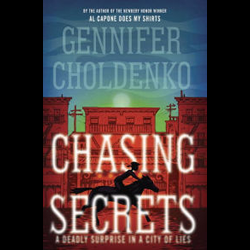
Book Review: Chasing Secrets

CHASING SECRETS by Gennifer Choldenko combines an engaging medical mystery with a little-known historical event.
Set in 1900, Lizzie would prefer to work along side her physician father than attend finishing school. She secretly longs to become a doctor and is fascinated by science. When part of San Francisco is quarantined, a family servant is trapped in Chinatown. Although officials are denying a plague, Lizzie is convinced that people aren’t telling the truth about what’s happening in the city and she is willing to do anything to save her friends and family.
This compelling work of historical fiction weaves together a number of interesting themes related to forbidden friendships, race relations, and class. It also sheds light on the history of immunization and people’s distrust of medicine.
Fans of Choldenko’s other works of historical fiction will recognize her use of humor, well-developed characters, and conversational writing style. Librarians will find an audience beyond those who traditionally read historical fiction. This is an excellent opportunity to pair historical fiction with nonfiction books about the history of medicine.
To learn more about the author, go to http://www.gennifercholdenko.com/.
Published by Wendy Lamb Books, an imprint of Random House Children’s on August 4, 2015. ARC from NetGalley.

Saturday, July 25, 2015

Website Review: Kids Health

KIDS HEALTH is an outstanding, informational website for kids, teens, parents, and educators.
This award-winning website is sponsored by the non-profit health organization The Nemours Foundation and contains limited ads. It’s available in both English and Spanish versions.
The Parent section contains information and advice for parents on topics including general health, growth, infections, diseases, pregnancy, nutrition, behavior, school, first aid, and other topics.
The Kids section is aimed at children including topics related to How the Body Works, Puberty & Growing Up, Staying Healthy, Recipes & Cooking, Staying Safe, Health Problem, Illnesses & Injuries, Health Problems of Grown Ups, People, Places & Things That Help, and Feelings. There are also areas containing Q&A, movies, quizzes, games, and a medical dictionary for kids. Most of the pages include attractive visuals and interactive elements to engage users. The reading level and focus are appropriate for elementary and middle grades.
The Teens area stresses topics of interest to young adults including Body, Mind, Sexual Health, Food & Fitness, Disease & Conditions, Infections, School & Jobs, Drugs & Alcohol, Staying Safe, and Recipes. In addition, the Q&A page focuses on FAQs. The “hot topics” pages feature issues of particular interest such as Lyme Disease, Depression, and Volunteering.
The Educator section provides health-related lesson plans across grade and subject areas including discussion questions, activities, handouts, and quizzes.
Librarians will appreciate the many informational reading pages that can easily be tied to the Common Core standards. Some of the pages contain a LISTEN button that reads the page aloud. This is particularly useful for reluctant readers and those with reading challenges.
To keep up-to-date on website updates, be sure to subscribe to the free, weekly newsletter.
Both mobile and desktop versions of the website are available. The mobile version works well with handheld-devices and tablets.
To learn more, go to http://kidshealth.org/.
To access the teacher section, go to http://classroom.kidshealth.org/.

Thursday, February 19, 2015

Website Review: American Heart Month

February is American Heart Month. The AMERICAN HEART ASSOCIATION (AHA) website at http://www.heart.org  contains lots of resources to increase awareness of heart health. Children and young adults can save lives if they know the warning signs of heart attack, stroke and cardiac arrest.
The AHA website is full of authoritative information useful to both students and educators.
The Getting Healthy section explores the topics of nutrition, stress management, physical activity, healthy kids, weight management, smoke-free lives, and workplace wellness.
The Conditions section encourages an awareness of heart and health conditions such as cholesterol levels and high blood pressure.
The Educator section contains great resources librarians can use when collaborating with physical education and classroom teachers on school-wide programs.
The News section contains new articles, infographics, video, and photos that youth can use in their research projects.
The Interactive Cardiovascular Library features engaging, educational science content related to the anatomy and function of the heart as well as information about heart health.
Much of the website’s content would be excellent for STEM informational reading activities.
For more information, go to http://www.heart.org.